Thursday, October 25, 2018

Bloodstained Curse of the Moon Review


After finishing off Momodora last week, I decided to keep the #HorrorGameOct train rolling and jump straight into another Castlevania-inspired 2D platformer, Bloodstained Curse of the Moon. Since this is short game, I finished it off in a single streaming session. Both the stream and the game itself were a total blast! Now that I've laid the demon king to rest, here's my review:

Background
Bloodstained Curse of the Moon is an NES-style 2D platformer from developer Inti Creates. This game was released earlier this year as a prequel to the upcoming Bloodstained Ritual of the Night. Both of these titles come from former Castlevania director, Koji Igarashi, with Curse of the Moon being based on the NES Castlevania titles, and Ritual of the Night being based on the PS1 and Gameboy Advance entries of the series. Wearing its inspiration on its sleeve, Curse of the Moon, features monster-slaying heroes progressing through spooky linear environments such as haunted forests and vampires’ castles.

Pros
  • At first glance, Curse of the Moon looks like an NES game, but it features graphical effects than an 8-bit system could never pull off. The color pallet is much broader and backgrounds feature multiple layers of parallax scrolling to give the 2D stages the appearance of depth. Enemy sprites are larger, more detailed, and far more plentiful, than the NES would have been able to render. It makes for a beautiful retro-inspired presentation.
  • Unlike the original Castlevania games, Curse of the Moon features a set of four playable characters than can be swapped in and out on the fly. Each character has unique abilities that can be used for both traversal and combat. Switching to the appropriate character at the right time can provide access to shortcuts through levels and have a substantial effect on the difficulty of boss battles.
  • Curse of the Moon’s difficulty is much more forgiving than the NES Castlevania titles. There are options for Casual and Normal difficulty, with the former choice granting infinite continues and eliminating knock-back (i.e. your character won’t get pushed off a platform if he gets grazed by an enemy). Also, since each of the four player characters has their own HP bar, cycling through them allows you to take a lot more damage before seeing the Game Over screen.
  • This game has some really cool boss designs. The large detailed sprite make them visually distinct and most of them employ a unique mechanic during their battles. Rather than just memorizing patterns, dodging, and attacking, these fights often involve making use of platforming skills and knowing when to switch to the right character.
  • The level designs have some features that stand out from this game's 8-bit inspirations. I appreciated the way that utilizing each characters' special skills could significantly change the route the player takes through a level. I was also impressed with some of the visual set pieces in this game's levels such as the train barreling through the forest in the first stage.
  • While it might not have the iconic tracks like "Vampire Killer" or "Bloody Tears", Curse of the Moon's soundtrack manages to come pretty close to reaching the high bar set by its source of inspiration. Veteran Castlevania composer, Michiru Yamane, hasn't lost her touch! I'm looking forward to listening to her pieces for this game again as well as any orchestral or heavy metal covers that fans arrange.

Cons
  • Curse of the Moon is generally less difficult and frustrating than NES platformers, a plus in my book. However, the last stage or two represent a pretty big difficulty spike. Several areas feature instant-kill traps that require some trial and error to traverse. I ended up losing several lives in the last stage due to entering a room with a trap that would activate much faster than I could react if I wasn't already prepared for it. This felt a little cheap.
  • Like the original Castlevania, Curse of the Moon can easily be beaten in a single sitting. While I personally don't consider this to be a negative, as I felt the length was appropriate to the type of game it is, I'm listing this as a con since some players might not feel that a 2-hour game is worth $10.
As someone who has been a fan of the Castlevania series for a long time, I came to this game with a discerning eye and sense of cautious optimism. I was thrilled by the result! Bloodstained Curse of the Moon is an incredibly effective spiritual successor to Konami's horror platformer series that delighted an old-school fan like me and will probably also offer a fun, but manageable, challenge to newcomers as well.

Score: ⭐⭐⭐⭐⭐
Completion Time: 1 hour, 58 minutes (Regular ending, Casual difficulty)

If you're curious about the #HorrorGameOct event, be sure to check out this blog post on Chic Pixel.


Thursday, October 18, 2018

Momodora Reverie Under the Moonlight Review


 As I had announced last week, I played through Momodora Reverie Under the Moonlight on Twitch as part of my #HorrorGameOct streaming series. Since it was a relatively short game, I ended up finishing it in two streaming sessions! Here’s my review of the game, now that I can put ot in the “completed” page of my backlog.

Overview
Momodora Reverie Under the Moonlight is an indie Metroidvania game that was originally released on PC in 2016. The game follows a priestess tasked with snuffing out the source of a curse that has caused the kingdom to be plagued by witches, skeletons, ghosts, and other Halloween-appropriate baddies. Though Reverie Under the Moonlight is the fourth installment of the Momodora series, it represents the point at which the series gained mainstream recognition and is thus my first exposure to the series.

Pros
  • Momodora features gorgeous pixel art and animations. The player character in particular has detailed animations while in action as well as a variety of charming idle animations.
  • For a colorful retro-style game, it pulls off a creepy atmosphere quite well. The spooky environment is enhanced by NPCs that express fear, anxiety, or malice even with relatively limited dialog.
  • The music is fairly low key but tends to kick in at the right times to give a sense of dread.
  • The protagonist’s mix of close and ranged attacks is fun to use. The game script describes the heroine’s weapon as a “magic maple leaf” but wielding it feels more like pillow case with a brick in it, giving landing a combo strike a satisfying sense of weight. I also enjoyed using the bow to juggle enemies and shoot down their projectiles.
  • Level designs in Momodora are not revolutionary for a Metroidvania, but offer enough variety and secrets to uncover to make filling in the map feel worthwhile.
  • Most games of this type offer some sort of traversal enhancement partway though (traditionally something like a grappling hook or jet pack). In this game you can transform into a cat!

Cons
  • The game’s difficulty didn’t scale consistently, especially when it came to boss battles. Some of these battles required full use of my action platforming skills, but there were also bosses where I could get away with just crouching in the corner and spamming arrows.  
  • Since the heroine’s strikes carry a lot of weight, positioning her during attacks felt a little imprecise, leading to a handful of accidental deaths during the first half of the game (I eventually learned to compensate).
  • The game has two endings. The bad ending is very unsatisfying. Getting the good ending requires following an obtuse process that I wouldn’t have been to figure out without consulting a guide. While the good ending is an improvement, it still felt anticlimactic compared to the buildup from the game’s atmosphere and NPC dialog.

While Momodora Reverie Under the Moonlight doesn't do much to deviate from the formula established by similar games that came before it, I enjoyed my time with it quite a bit thanks to its strong mechanics and presentation. It’s generally a solid-by-the-numbers Metroidvania that'll please fans of the genre but won’t win over holdouts.

Score: 🎃🎃🎃🎃
Completion Time: 6 hours (98% map completion)

Disclaimer: As of this week, Tales from the Backlog is no longer participating in the Amazon Affiliates program. I'll be sure to include a new disclaimer if I enter into a new advertising/sponsorship arrangement in the future. Any Amazon links in older posts will still work for shopping purposes but no longer serve as a revenue source for this blog.


Thursday, October 11, 2018

Dragalia Lost Impressions


While I’m not the biggest mobile gamer, whenever there’s the opportunity to play something published by Nintendo (legally) on my phone, I’m sure to give it a shot. Their newest mobile title, Dragalia Lost, is an interesting one in that it’s not adapted from an existing Nintendo franchise, but is a new IP they created in collaboration with CyGames Studios (of GranBlue Fantasy and Rage of Bahamut fame). So far, I’ve been able to put a few hours into the game, which feels like just scratching the surface, but that's been enough for me to put together some early impressions.

Overview
Dragalia Lost is a free-to-play fantasy action RPG. The campaign consists of alternating visual novel-style story scenes and short overhead dungeon sequences in which the player fights a few enemies, gathers some treasure, and then fights a boss (like a very simplified version of Zelda or Ys). The player controls a party of four characters, most of which have the ability to transform into powerful dragons for a brief period of time. Dragalia Lost makes its money via microtransactions, primarily in the form of randomly drawn items, characters, and dragons (i.e. a “gachapon” or “loot crate” mechanic).

Observations
  • This game has very high production values for a mobile game. The graphics and character designs look very nice, many of the cut scenes are fully-voiced, the musical score includes several vocal tracks, and there are some TV-quality animated scenes sprinkled throughout.  The overall presentation is about on part with a late 3DS game.
  • In other mobile games I’ve played, including Nintendo’s own Fire Emblem Heroes, the story has felt like something cobbled together to justify the action and spur the player to put money into the gacha system. Draglia Lost’s story and characters feel richer, more like what I would expect from a more traditional video game. The depth of the lore, from what I’ve seen so far, almost feels wasted on a free mobile title.
  • I’ve been pleasantly surprised by the writing in the dialog sequences. I particularly like Notte, the protagonist’s fairly companion. Her humorous lines put her way ahead of previous similar characters like Navi in Ocarina of Time.
  • The voice acting for the main characters is solid, though some of the supporting characters sound a little off. Overall, it’s about on par with dubbed anime.
  • Dragalia Lost has systems on top of systems and I’m still discovering more after several hours of gameplay. Every character can be modified in several ways, each piece of equipment can be upgraded, the party’s composition can be changed around, and you can feed the dragons to raise their stats! I find myself too impatient to tinker with all this and instead just trust the “Optimize” button to do its job.
  • Touch screen controls aren’t ideal for an action RPG, but the implementation in this game gets the job done. I’m generally able to move, attack, and dodge with a reliable degree of accuracy. Some of the special moves that require specific holding and swiping gestures feel a little clumsy,  however.
  • In what I’ve played up until this point, using the gacha system or other microtransactions haven’t been essential. With the free stuff I collect by playing the game, I’ve been able to get the characters and items I’ve need and avoid running out of stamina. The impetus for microtransations may ramp up a bit in the future, but I’m thinking it will be quite some time before I’ll feel like the game is truly pushing me to spend money.
  • Dragalia Lost features some really catchy music. There’s a couple of Japanese vocal tracks that I would love to listen to outside of the game.
  • The dungeon level designs are pretty bland. Each one is essentially comprised of the same thing: about three kill rooms with weaker enemies, a treasure chest that is slightly off the main path, and then a boss battle. Since these sections are pretty short (less than five minutes), I can understand why they keep it simple.
  • The story-to-gameplay ratio seems pretty high for a mobile game. I would think that for a mobile game the idea is to get in, bash some enemies, and get out. Instead I've had many sessions with this game that are primarily watching cut scenes. This isn't necessarily a bad thing, since the cut scenes are enjoyable, it's just not what I would expect from a game on my phone.
  • Dragalia Lost does something that a lot of mobile games do that drives me crazy. The game requires installation of large mandatory patches on a regular basis. The game doesn't auto update, so if it's been a few days since you've played, be prepared to spend a large chunk of your gaming session staring at a download progress bar. This can be especially problematic for those on a limited data plan. (I had this same issue with Fire Emblem Heroes and UtaPri)
Despite some issues that are prevalent in free-to-play mobile games in general, Dragalia Lost has really impressed me. Its combination of fun characters, bopping sound track, and decent gameplay will mean that it'll probably be my go-to phone time waster (other than Twitter) for at least the next few weeks. Also, knowing that many other Cygames properties have been adapted into other media, primarily anime, I'm curious to see what fruit their partnership with Nintendo may bare in the future.

Since this post is about a free game, there's nothing to topical to advertise. However, if you'd like to pick up a new game while also supporting this blog, you can do so via this affiliate link: Amazon Video Games


Sunday, October 7, 2018

#HorrorGameOct Streaming Series


Final Fantasy 5, Ys, Beyond Oasis, and Battle Chef Brigade... I've been on a long streak of RPGs on my Twitch stream and it's time to change things up. Thus, for the rest of the month of October, I'll be switching to one of my other favorite genres: 2D platformers! On top of that, this month is #HorrorGameOct, so I'll be focusing on platformers with a spooky Halloween theme. (If you'd like to know more about #HorrorGameOct, check out this post on the Chic Pixel blog).

The first game in the line-up will be Momodora: Reverie Under the Moonlight, a Metroidvania game set in a world of monsters, witches, and curses. This game has been on my radar for a while for its great pixel art, so I'm really looking forward to digging into it. If I manage to finish Momodora before the month is over, the next game in the lineup will likely be Bloodstained Curse of the Moon, a spiritual successor to the 8-bit Castlevania games.

Streams will be on my Twitch channel on Tuesday nights from 8 - 11 PM ET. I hope you'll look forward to joining me for some spooky platforming fun!

 If you'd like to pick up a spooky game of your own while also supporting this blog, you can do so via this affiliate link: Amazon Video Games

Thursday, September 27, 2018

The Adventure Pals Review


Browsing the recent release lineup for a co-op game to play together, my wife and I happened upon The Adventure Pals. The promotional art and trailer featured a boy riding on a cute cartoon giraffe (my wife’s favorite animal), so of course we had to check it out. Did we make the right call by picking out a game based on aesthetics alone? Some thoughts:

Overview
Adventure Pals is a 2D platformer with RPG elements about a boy and his pet giraffe set in a wacky cartoon world. While the boy has fairly standard moves (jumping, wall kicking, and sword swiping), the giraffe gives him the ability to swing from grapple points, fly by spinning the giraffe’s tongue like a helicopter rotor (yes, you read that right), and quickly swim underwater (I had no idea giraffes are amphibious). When playing in co-op mode, the second player controls a set of characters equivalent to the first player’s (i.e. a girl with a very giraffe-like unicorn pal). Each player also has a pet rock that gathers items for them and protects them from spikes).

Pros
  • When it comes to visuals, The Adventure Pals has charm and personality in spades. The goofy but cute look may be reminiscent of Adventure Time, but each of this game’s characters and enemies have a fun and unique design all of their own. The world design also looks fresh off a Saturday morning cartoon.
  • To complement the wacky visuals, there is equally bizarre and humorous writing and scenarios. Throughout the adventure, the titular pals reunite a farmer with his pig (that is also his wife), rescue elderly people that have been turned into hotdogs, and intervene in a conflict between dinosaurs and sentient pieces of toast. Seeing what weird thing would happen next was definitely part of the fun.
  • The Adventure Pals controls very well. It doesn’t take long to get the hang of the characters movesets. After a level or two, my wife and I were comboing up jumps, wall kicks, grappling, and ziplining to fling our characters around the map with ease. In general, platforming just felt good. Most combat can be gotten through just by mashing the sword swipe button, which is totally fine for this type of game.
  • Everything explodes. You may have noticed in some of my previous reviews (e.g. Just Cause 2), I like a game that lets you blow things up. The Adventure Pals delivers with exploding enemies and explosive barrels that can be launched into groups of enemies. Setting up chain reactions to take out enemy mobs instead of fighting them head on was very satisfying.
  • While getting from point A to point B in a given level is often straightforward, finding the optional collectables (i.e. cupcakes and stickers) provides an opportunity to really explore every little nook and cranny. Many of the levels seem simple at first but their intricacies become apparent if you take the time to find everything.
  • Collecting the cupcakes unlocks new hats for your human character and costumes for the pet rock. These ran the gamut of cute, funny, and weird. This was more than enough justification to scour each level thoroughly.


Cons
  • During our adventure, we ran into a few glitches that caused us to have to restart a level or deliberately kill our characters to reset a stage. For example, in one instance we locked our characters inside a room and in another case, clearing an area of enemies was supposed to trigger an event but nothing happened. These issues were infrequent enough to have minimal impact on our experience but were still a little jarring.
  • With all the chaos and explosions on screen, it can sometimes be hard to keep track your character’s location, especially with two players. Many of our combat deaths could be attributed to losing our characters on screen, or confusing one player’s character for the other.
  • Even though this is a 2D game, it seemed to put strain on the Nintendo Switch in some of the later stages resulting in frame rate drops and lag. There were only a few areas in the whole campaign where this came up, but it’s a shame that it was an issue at all. I’m not sure if this issue is Switch-specific or comes up on other versions of the game as well.

Overall, The Adventure Pals is a satisfying co-op 2D platforming experience that sets itself apart with quirky appeal. While I didn’t try it single-player, it may be a little too simplistic to play solo, but for those who have a partner and love cute cartoon creatures, The Adventure Pals comes highly recommended.

Score: ⭐⭐⭐⭐
Completion Time: About 10 hours (100% completion)

Adventure Pals is available on Nintendo Switch, PC, Xbox One, and PS4. If you’d like to listen to the game’s sound track while also supporting this blog, check it out on Amazon Music using the following affiliate link: Adventure Pals Soundtrack

Wednesday, September 19, 2018

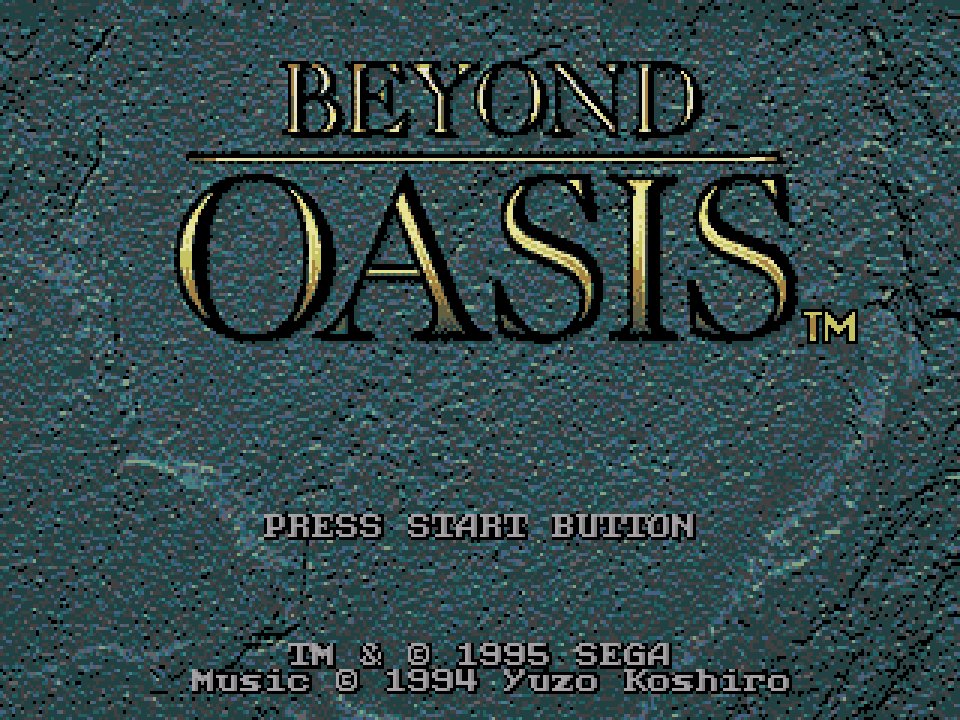
Beyond Oasis Review

https://pbs.twimg.com/media/DlKscjjXoAAxhUX.jpg

 In an effort to fulfill the promise I made in my “Sega Gap” post, I decided to make my last game of #ARPGAugust something from the Sega Genesis library. After playing several other great games in the action RPG genre this year such as Blossom Tales and Ys, the bar was set quite high. Here’s how it faired:

Overview

Beyond Oasis is an action RPG that was originally released in 1994 for the Sega Genesis. In the game, the protagonist, Prince Ali, finds a golden armlet that gives him the ability to summon magical creatures. He travels around the kingdom to find new creatures to summon and hunt down his nemesis who wields the power of the silver armlet. The game has been a part of many Sega classic collections; I played it as part of the Sega Mega Drive & Genesis Classics package on PC.


Pros
  • This game’s graphics look very sharp. The world features a bright color pallet and the large sprites feature a nice level of detail and distinct animations.
  • Rather than just slashing a sword like most ARPG characters, Ali has diverse arsenal of moves. In addition to sword swipes, he can punch, kick, perform areal strikes, and equip several types of swords, bows, and bombs. In combat, the way he moves reminds me of an arcade beat’em up game.
  • The summon creatures are Beyond Oasis’s defining feature. I liked that summoning requires using a feature of the environment that corresponds with the creature’s element. For example, summoning the water sprite requires aiming the golden armlet’s beam at a water feature. However, this isn’t just limited to the obvious lakes and streams, any source of water will work, even tiny drops of water coming from a cave ceiling. Similarly, the shade spirit, that’s summoned from mirrors, can be summoned off of other reflective surfaces, such as enemies wearing shiny metallic armor. Figuring out how and when to summon each creature and using their abilities to solve puzzles, is easily the most interesting part of the game.

Cons
  • Boss battles at the end of dungeons tend to be pretty dull. Most of them just consist of running around to avoid the enemies special attack, and then running in and spamming the attack button while they recharge. In some battles, I just abused healing items so that I could play sloppily and not worry if I got hit.
  • This game is viewed from a 3/4 top-down perspective but has segments that require precision platforming on tiny moving platforms. Also, Ali’s movements are very slippery. Thus, neither the game’s camera nor controls are set up for platforming, making these segments incredibly frustrating. I save-scummed my way through them.
  • While the summon creatures are fun to use for puzzle solving, they don’t control very well. Once summoned, they wander around on their own and the player has to wait for them to get into the right position before triggering one of their special moves. This was workable for puzzle solving, but made the creatures of little value in combat.
  • The story of this game is extremely bare bones, more comparable to an NES game than Beyond Oasis’s 16-bit contemporaries. Basically, because Ali found the Gold Armlet, it’s his destiny to gather the summon creatures and defeat the wielder of the Silver Armlet. Dialog in the game consists of short choppy sentences that don’t give the characters much personality. There is one noteworthy plot twist toward the end, but that lack of character personality or progression caused it to have little impact.
  • One of the reasons I was excited to play Beyond Oasis is that the soundtrack was composed by Yuzo Koshiro, who also composed the music in Ys series (which I absolutely love). I’m not sure what went wrong here, but I found that the music in Beyond Oasis sounded very out of place, at times to the point of being irritating.
Ultimately, the problem with Beyond Oasis is that it’s not deep enough for an RPG or adventure game, but not tight enough for an action game. With the exceptions of its summoning mechanics and graphics, the game feels more primitive than competing games in its genre that had come out before it such as Ys, A Link to the Past, and Illusion of Gaia. Despite, the game’s short length (< 7 hours), there were several points where I strongly considered dropping the game, putting Beyond Oasis firmly into sub 3-star territory.

Score:⭐⭐
Completion Time: 5 hours, 51 minutes

In stead of picking up Beyond Oasis, I would recomend picking up the similary named action RPG, Ever Oasis, for the 3DS. If you'd like to get this overlooked late-3DS gem while also supporting this blog, you can use this affliate link: Ever Oasis - 3DS 


Saturday, September 8, 2018

Dragon Con 2018

After having such a great time at last year's Dragon Con (highlights), we returned this year along with over 80,000 other geeks. I didn't do as much video game related activities at the Con this year as I did last year, but there were still a few interesting things to note:

Japanese Arcade

This year's Japanese Arcade featured some new additions. While gamers like to joke about Konami not making games anymore, they are still alive and well in the arcade scene; there was a wide variety of arcade games on display here, with many of them being by Konami.  Here's a rundown of some of the games I got to play:

Dance Evolution - Older dancing games like Dance Dance Revolution used buttons on the floor to track dancing moves. New ones like Dance Evolution use Xbox Kinect technology to track a player's whole body allowing for a wider variety of moves. I was terrible at this game, much like I am at actual dancing, so perhaps the simulation is too accurate?


Bishibashi Channel - Last year I got to play an older version of Bishibashi. This new version adds a rotating pad to the controls in addition to the buttons. Thus, the spastic collection of mini-games can get even weirder, like this foot-tickling one, for instance.

Scotto - This one felt like some kind of high tech fusion of beer pong and skeeball. The player bounces ping pong balls off of the white panel at the front of the cabinet into the goal basket. Depending on the game mode being played, you either have to rapidly bounce balls directly into the basket or accurately bank the ball off the glowing pads and then into the basket as directed on the screen. I did pretty well when I played this one; turns out those seemingly useless skills I developed playing drinking games in college came in handy!


Gunslinger Stratos 3 - In the West, people don't often think of Square Enix when they think about arcade games, but in Japan, it's another story. I had seen older versions of Square Enix's Gunslinger Stratos when I was in Japan several years ago, but this was my first opportunity to play it myself. It's a 3rd person arena shooter in which the player holds a lightgun in each hand while moving the character around using the analog sticks and buttons on the back of each gun. I only had the time to play it once, so I spent most of my time just trying to get the hang of the controls. Characters can jump and flip through the air and stages have a lot of verticality to them, so it seemed like some really fun arial battles would be possible if I had more time to get down the fundamentals.

Cosplay

I didn't see quite as much video game-related cosplay on the convention floor this year as I did last year. However, I did get to attend a gaming cosplay competition and visit a costume exhibit. For some of these events I didn't have the best vantage point and was reliant on my cell phone camera, so I apologize for some of the images that came out blurry or grainy. Anyway, here are some of the gaming costumes that stood out to me:

Silver Knight from Dark Souls
Ahri from League of Legends
Bastion from Overwatch
Skull Kid from The Legend of Zelda: Majora's Mask
Junkrat from Overwatch
Monster Hunter
Gengar from Pokemon (kid's level of the contest)

Fallout Power Armor
Purple Wizard from Diablo 3

Blood Elf Paladin from World of Warcraft
Bunny Hutch Party: Shy Guy Bunny
Bunny Hutch Party: Bomberman Bunny
Overall, we had another great year at Dragon Con and are already looking forward to returning next year! I'm planning to attend some more gaming-focused cons in the future, so look forward to posts about those as well!

If reading this post has caused you to want to step up your cosplay game in time for Halloween, you can pick up costume supplies while also supporting this blog by using this affiliate link: 
Amazon Costume Department